Aramis Capital
Why Most Investors Misunderstand Risk | Aramis Capital
Why Most Investors Misunderstand Risk
What investors call risk is usually something else entirely. Understanding the difference between temporary market movement and permanent capital loss is the foundation of disciplined investing.
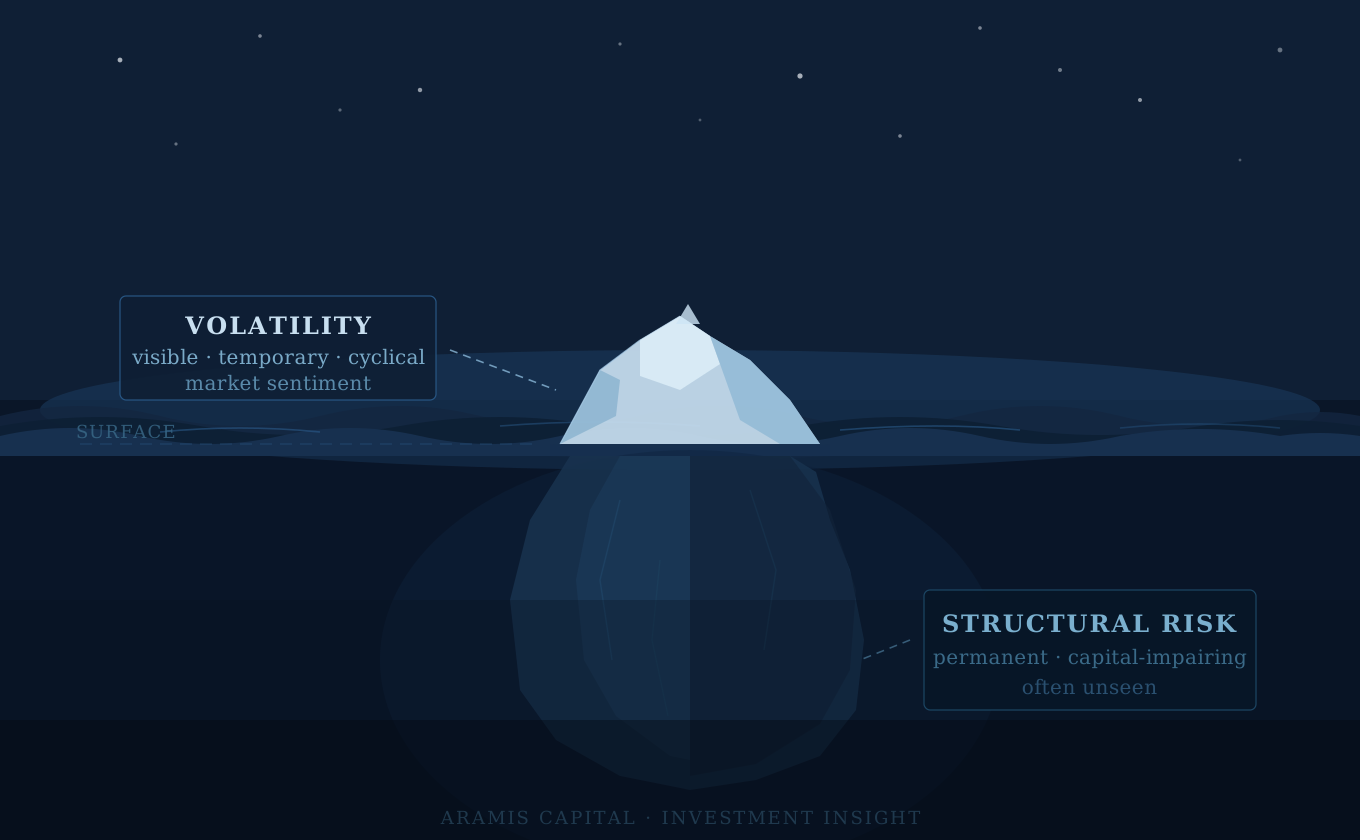
What investors call risk is usually something else entirely.
Most market participants use the word "risk" to describe volatility — the daily movement of prices, the discomfort of drawdowns, the noise of an uncertain quarter. It is an understandable conflation. Volatility is visible, immediate, and feels consequential in the moment.
But visibility is not the same as danger.
Markets have always moved. They move in response to sentiment shifts, geopolitical events, liquidity changes, and the collective anxieties of millions of participants making decisions simultaneously. This movement is not a malfunction. It is the mechanism by which capital markets operate. In most cases, it is temporary.
Risk, in any meaningful sense, is something categorically different. It is the permanent impairment of capital — loss that does not recover, structural damage to a portfolio that no amount of time will repair. The distinction matters enormously, because the two demand entirely different responses.
Consider an investor who holds a well-constructed portfolio through a 30% market decline — a decline driven not by deteriorating fundamentals, but by a broad contraction in investor sentiment. If the underlying businesses remain sound, that investor has experienced volatility. Their capital has not been permanently impaired. The uncomfortable months will pass.
Now consider the investor who exits during that same decline, locking in losses and sitting on the sidelines while the recovery unfolds. For that investor, what began as temporary volatility has become permanent destruction of value — not because the market failed them, but because their framework for thinking about risk did.
This is not a theoretical distinction. It is the difference between compounding wealth over time and eroding it.
Institutional investors have long understood this. Their frameworks are not built around the avoidance of short-term fluctuations — they are built around the discipline to endure them. Portfolios are structured with the recognition that markets will fall, that sentiment will deteriorate, and that neither of these events constitutes a reason to abandon a sound position.
Time horizon is central to this discipline. Investors evaluating performance over weeks or months are, almost by design, going to misread volatility as risk. The signal-to-noise ratio is too low. Lengthening the horizon changes what you see — it separates the permanent from the temporary and allows for more rational capital allocation decisions.
The real exposure in most portfolios is rarely where investors are looking. It is not in the movement visible on a screen. It is in the structural decisions made in response to that movement — the premature exits, the reactive reallocations, the capital left uninvested because uncertainty felt too uncomfortable.
The question worth asking is not whether your portfolio is volatile. It will be. The question is whether it is structurally sound — and whether you have the framework to hold it when the answer is not obvious.
Is your portfolio actually at risk — or just volatile? Aramis Capital explores the distinction that separates disciplined investors from reactive ones.
Disclaimer
Aramis Capital provides investment-related information for general informational purposes only. Nothing on this website constitutes financial, legal, or investment advice, nor should it be relied upon as such. Past performance is not indicative of future results. All investments involve risk, including the possible loss of capital.
Services and products described on this website are subject to applicable laws and regulatory requirements and may not be available to all investors or in all jurisdictions.
© 2026 Aramis Capital. All Rights Reserved.